Just Peace For Sudan
data:image/gif;base64,R0lGODlhAQABAAD/ACwAAAAAAQABAAACADs=

JUST PEACE FOR SUDAN

JUST PEACE FOR SUDANJUST PEACE FOR SUDANJUST PEACE FOR SUDAN

THE SUDAN PEACE AND RECOVERY KNOWLEDGE PROJECT
JUST PEACE FOR SUDAN

JUST PEACE FOR SUDANJUST PEACE FOR SUDANJUST PEACE FOR SUDAN

THE SUDAN PEACE AND RECOVERY KNOWLEDGE PROJECT
An independent evidence base to inform Sudan’s peace, justice and recovery

Just Peace for Sudan is building an independent library of research to inform the peace process, reconstruction and long-term recovery of Sudan. The project applies a human rights-based approach and aligns its analysis with the UN Sustainable Development Goals, providing policymakers, researchers and practitioners with the evidence needed to support a just and durable peace.

Why this matters

Sudan is facing one of the world’s largest displacement crises, with millions forced from their homes and famine conditions confirmed in parts of the country since conflict between the Sudanese Armed Forces (SAF) and the Rapid Support Forces (RSF) began in April 2023.


Much of the international response to date has focused on managing the humanitarian emergency rather than the political economy sustaining it. Peace processes that treat the two forces as equivalent political actors risk legitimising the conflict’s continuation, rather than resolving the drivers of the war.


Just Peace for Sudan was established to help close that gap — bringing together rigorous, independent research capable of informing a peace process that addresses causes as well as consequences.

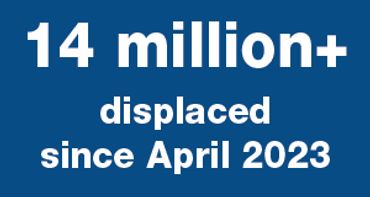
over 14 million people have been displaced from their homes in Sudan since the outbreak of war in Ap
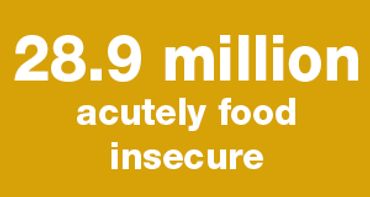
28.9 million people in Sudan are acutely food insecure
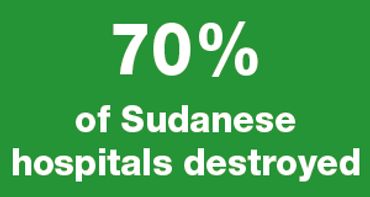
70% of Sudanese hospitals have been destroyed since 2023

What we’re building

The project is assembling a library of original policy papers and knowledge products, produced by a global research team combining public data analysis, satellite monitoring and on-the-ground reporting from Sudanese and international researchers. It also draws together and signposts relevant research already produced by other institutions, to provide as complete a picture as possible of the conflict and the path to recovery.


This combined approach is designed for a context where data is scarce and access is difficult: internet blackouts and insecurity limit conventional research methods across much of the country

The research is organised in three phases:

  • Phase I — How We Got Here. The historical and political roots of the crisis: the legacy of past regimes, the capture of state wealth, and Sudan’s development trajectory before 2023.


  • Phase II — The War and Illegal Economy. The financing and conduct of the conflict, including sanctions evasion and the illicit economies sustaining armed groups, documented using tools such as satellite imagery and open-source monitoring.


  • Phase III — Rebuilding the Country. Frameworks for a future civilian-led government, economic recovery, and transitional justice for crimes committed during the conflict.


Who’s involved

Just Peace for Sudan is co-steered by SDG Action and the Strategic Priorities Hub (SPH).


SDG Action is a global advocacy platform that mobilises networks to accelerate progress on the UN Sustainable Development Goals. Within this project, it ensures the research agenda remains tied to the UN’s 2030 Agenda and international development standards.


The Strategic Priorities Hub (SPH) is a regional think tank specialising in data-driven policy research. Within this project, it contributes expertise in socio-economic policy and international law, grounding the project’s frameworks in the realities of the region.


The project’s research agenda is guided by a Strategic Leadership Board — senior figures with experience in peacebuilding, mediation and post-conflict reconstruction — supported by an Expert Reference Group combining international specialists with Sudanese experts who have direct knowledge of events on the ground.


Get involved

Just Peace for Sudan works with three overlapping groups: people and institutions who contribute to the research itself, those who support the project’s ability to do that work, and the audience the findings are ultimately written for. Many of our partners are more than one of these at once — an NGO might contribute field reporting, help disseminate findings, and use them to inform its own programming, all at the same time.


Contribute

Add expertise, evidence or access to the research itself. We are building a contributor network of researchers, on-the-ground reporters, open-source analysts, and specialists in conflict finance, atrocity prevention and governance — from Sudanese universities and regional institutions to established international research centres.


Support

Back the project’s ability to do this work — as a funder, an adviser, or an institution willing to lend its name, access or dissemination network. This includes NGOs working in the region, academic partners, and organisations able to help findings reach the people who can act on them.


Stay informed

Follow the research as it publishes. This matters as much as the other two: much of what this project produces is written directly for a policy and diplomatic audience — international and regional bodies responsible for political affairs and peacebuilding; special envoys, rapporteurs and offices with an atrocity-prevention mandate; UN agencies working on refugee protection, human rights, transnational crime, disarmament and counter-terrorism; financial and regulatory bodies with a mandate over sanctions and illicit finance; defence and security think-tanks; diplomats, and ministries for foreign affairs and development assistance.

Sign up to participate

When you sign up, we’ll ask how you’d like to engage — to contribute, to support, or simply to stay informed — so we can share what’s most relevant to you.

Sign up

Copyright © 2026 Just Peace For Sudan - All Rights Reserved.

  • Privacy Policy

This website uses cookies.

We use cookies to analyze website traffic and optimize your website experience. By accepting our use of cookies, your data will be aggregated with all other user data.

DeclineAccept